The curiosity collection · 30 sourced stories
30 weird facts that sound made up — but are true
A parachute delivery for beavers. Olympic medals for art. A lake that drained into a mine. These 30 interesting facts come from the Wildly True story collection, where the explanation is often as surprising as the headline.
Browse by subject or enjoy a few random facts along the way. Every entry links to the full story and its sources, including the details we know—and the ones we don’t.
Chapter 01
Animals & behaviour
Unexpected abilities. Unusual encounters.

Idaho relocated beavers by parachute
The delivery needed more than a parachute: a wooden box stayed closed in the air and opened when it landed. The field report records 76 beavers transported in 1948, with one death during a drop. Later dams and lodges suggested some had established themselves; they were not a lifetime record of every beaver.
Full story & sourcesA wet trail pointed to an octopus escape
Inky vanished from a New Zealand aquarium. Staff traced a likely route across the floor to a drain connected to the sea. Nobody watched the whole escape, and the empty tank could not reveal Inky’s motives or what happened afterwards. This was a reconstruction from clues, not a filmed getaway.
Full story & sourcesA horse’s “arithmetic” depended on the questioner
Clever Hans appeared to answer questions by tapping his hoof. In Oskar Pfungst’s tests, his success depended on seeing someone who knew the answer. Tiny, unintended movements told him when to stop. The horse was an attentive observer; the experiments did not demonstrate that he was doing arithmetic.
Full story & sourcesWombat droppings form corners inside the intestine
Researchers found cubes forming before the droppings left bare-nosed wombats. Parts of the intestinal wall stretched differently, and a model showed how uneven stiffness could help produce corners. That mechanism remains a supported hypothesis, rather than a direct observation of every movement inside a living wombat.
Full story & sourcesPigeons learned to distinguish Monet from Picasso
After training with painting slides, pigeons could also distinguish unfamiliar works by the two artists. The result went beyond memorising individual pictures. It showed learned visual discrimination, though—not knowledge of art history or evidence that the birds enjoyed one painter more than the other.
Full story & sourcesBumblebees rolled balls without a food reward
Bees could walk straight to a feeding area, yet some repeatedly detoured to roll wooden balls. They had not been trained to do it for sugar. Researchers interpreted the voluntary behaviour as play; the experiment recorded rolling and preferences, not a direct measurement of a bee’s feeling of fun.
Full story & sources
Chapter 02
Inventions & ingenuity
Small ideas with a surprising second life.
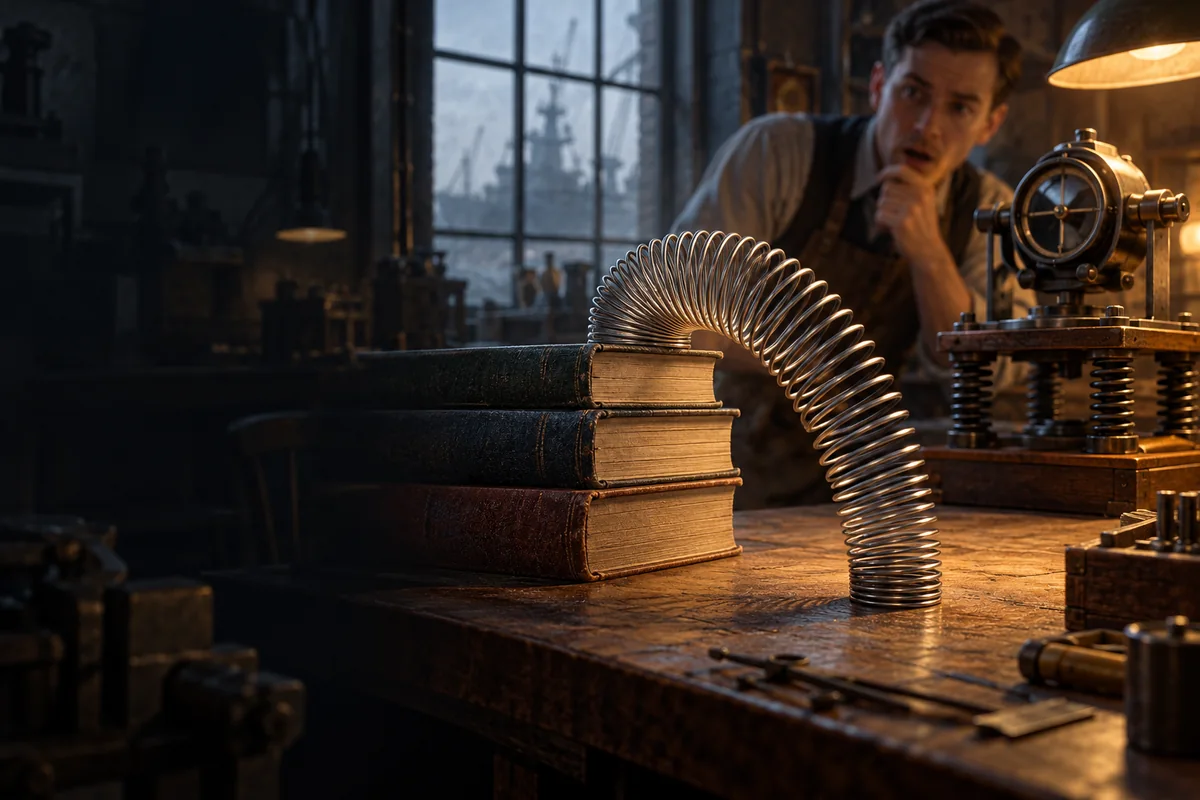
The Slinky grew out of shipboard spring research
Richard James was working on springs to steady sensitive instruments aboard ships when a falling spring caught his attention. Its movement helped inspire a toy, later named by Betty James. The discovery story comes from inventor history; the patent documents the designed toy’s motion, not the instant of inspiration.
Full story & sourcesPost-it Notes needed a useful kind of weak bond
Spencer Silver developed an adhesive that could hold and release. Art Fry found a purpose for it in bookmarks that stayed in his choir hymnal. Turning that idea into dependable notes took further work, including keeping the adhesive on the paper as it peeled away from another surface.
Full story & sourcesBubble Wrap began as an idea for wallpaper
Before it cushioned parcels, the air-pocket material was intended as a textured wall covering. Product histories trace its move into packaging, where compressible pockets offered protection around fragile objects. A later patent explains how the sheets were manufactured; it does not independently prove the wallpaper origin story.
Full story & sources
Chapter 03
Space & flight
Improvisation, instruments and improbable landings.

A balloon-lifted lawn chair reached airline airspace
Larry Walters flew from a California backyard in a lawn chair attached to helium balloons. Airline crews reported seeing him, and the FAA’s chronology gives an approximate height of 16,000 feet. He survived the flight. The chair is now a museum object, but its altitude remains a reported estimate.
Full story & sourcesApollo 12 was struck by lightning twice during launch
The strikes left controllers facing confusing instrument readings. John Aaron recommended switching the Signal Conditioning Equipment to AUX, and Alan Bean made the change. Usable telemetry returned, helping the team assess the spacecraft. The switch restored information; further checks and recovery steps were still needed before the mission continued to the Moon.
Full story & sourcesApollo 13 used everyday supplies to adapt an air filter
The crew had carbon-dioxide absorbent in canisters that did not fit the lunar module’s system. Ground engineers devised an adapter using a bag, card, tape and a suit hose, which the astronauts reproduced in flight. The absorbent removed the gas; the improvised parts directed air through it.
Full story & sourcesHubble’s mirror was corrected without being replaced
Faulty test equipment had guided the polishing of Hubble’s primary mirror into the wrong curve. Astronauts later installed corrective optics and a camera with its own correction. The original mirror stayed in place: understanding its precise error made it possible to compensate elsewhere in the light path.
Full story & sourcesA passenger jet glided to a runway used for motor racing
Air Canada Flight 143 ran out of fuel and landed at Gimli, saving all 69 people aboard. Confused fuel units were part of the failure, alongside inoperative gauges and other missed safeguards. The extraordinary landing followed a chain of problems, rather than one isolated arithmetic slip.
Full story & sources
Chapter 04
Engineering
Big structures. Unconventional solutions.
A draining lake made its canal flow backwards
When Lake Peigneur emptied into the salt mine below, its falling level drew water inward through a canal that normally carried water out. Everyone underground escaped. Early reporting counted 50 miners; the later official report recorded 52 people underground. The reading keeps both counts attached to their sources.
Full story & sourcesRemoving soil helped stabilise the Leaning Tower of Pisa
Engineers carefully extracted soil beneath the tower’s higher northern side, allowing it to settle back slightly. The correction reduced the lean by about half a degree, without making the tower upright. Temporary cables were a precaution; they were not the mechanism that pulled the tower into its safer position.
Full story & sourcesHoover Dam was cooled from the inside
The dam’s concrete generated heat as it hardened. Embedded pipes circulated cooling water through separate blocks, which were joined with grout after contraction. The famous 125-year cooling estimate concerned a hypothetical single continuous pour, not the way the actual dam was built.
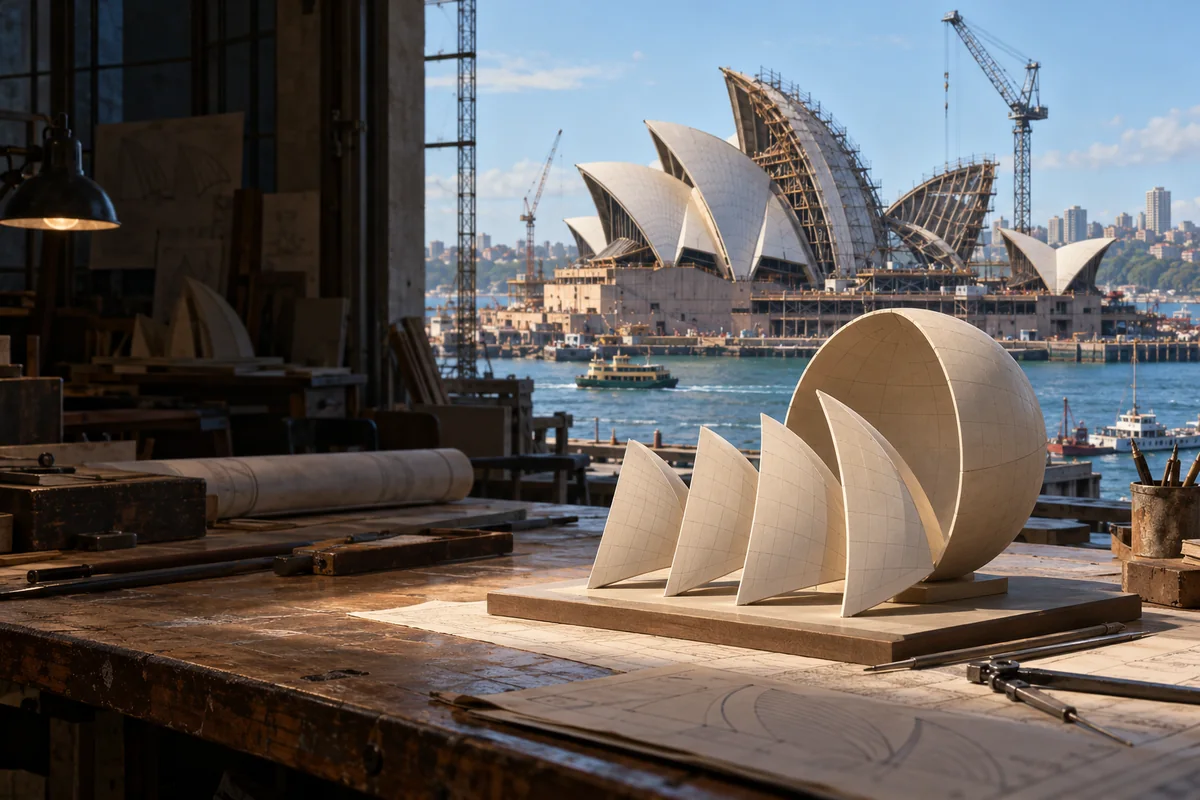
Full story & sourcesSydney Opera House’s different roof forms share one sphere
Deriving the roof surfaces from a common sphere gave differently sized forms the same underlying curvature. That helped make construction elements repeatable. An orange peel can illustrate the geometry, but the Opera House’s history treats the familiar orange-inspired discovery story as a myth.
Full story & sources
Chapter 05
Secrets & scams
Hidden messages and convincing illusions.
The CIA says cats interfered with its rat-shaped hiding places
Prepared rat carcasses could conceal material for later collection without a face-to-face meeting. According to the CIA’s retrospective account, cats disrupted the plan, prompting the use of wormwood oil as a deterrent. The agency describes the technique, but does not provide a tally of how often it succeeded or failed.
Full story & sourcesA secret submarine recovery ship lifted through its own hull
The Hughes Glomar Explorer had a central docking well through which a capture device could descend and return. This let recovered material enter the ship without being raised openly alongside it. The CIA’s account acknowledges that part broke away: it describes a partial recovery, not the retrieval of an entire submarine.
Full story & sourcesA conman offered the Eiffel Tower as scrap
In the tower operator’s account, Victor Lustig posed as an official and persuaded dealer André Poisson to pay for supposed dismantling rights. Lustig’s authority was invented. The account leaves the price unknown and describes a failed second attempt, so a neat story about two completed sales goes beyond this evidence.
Full story & sourcesA viewer tried to redeem Pepsi Points for a fighter jet
John Leonard submitted points and a cheque after a commercial displayed a Harrier jet for seven million points. The aircraft was absent from the promotion’s catalogue. The court ruled for PepsiCo, finding that the advertisement did not make the claimed offer; the appeal upheld that decision.
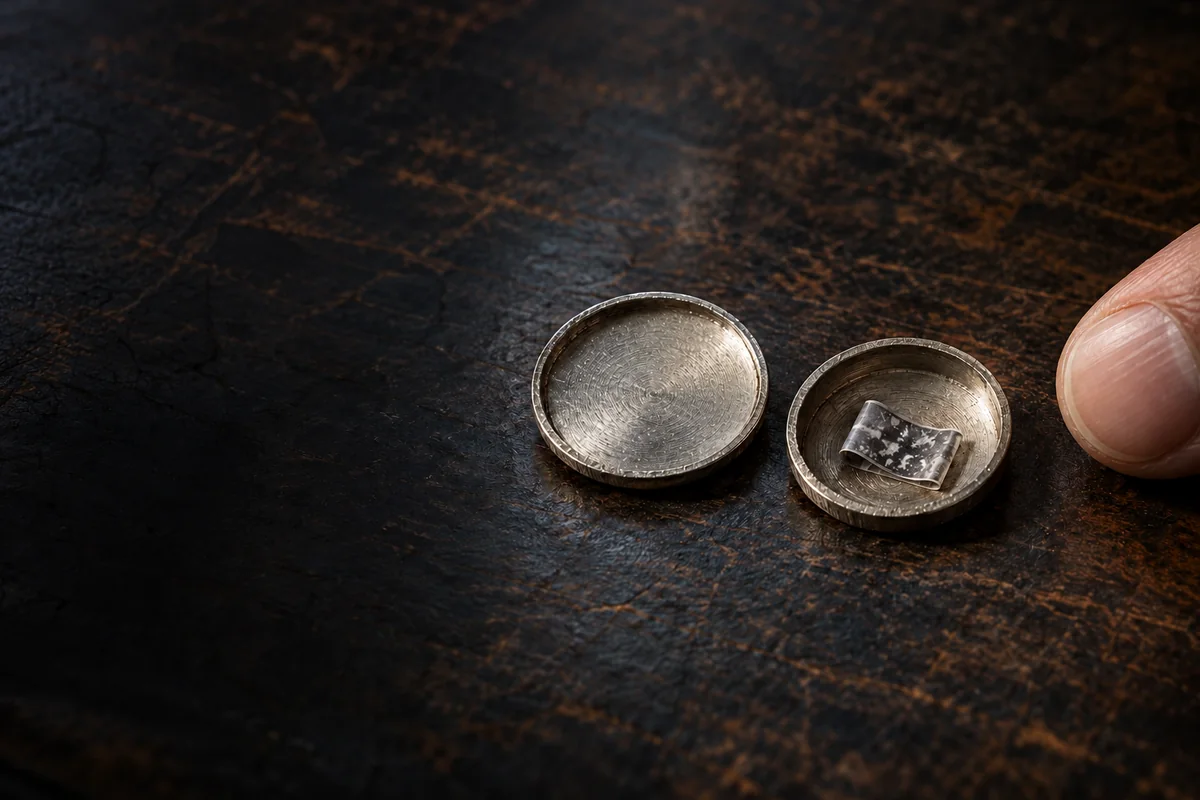
Full story & sourcesA broken nickel revealed a message that stayed unread for years
A newsboy’s coin split open to reveal a tiny photograph of coded text. Finding the message did not reveal its meaning. Years later, information from a defecting Soviet intelligence officer allowed investigators to decode it. The hollow container, miniature image and code had provided three different layers of concealment.
Full story & sourcesThe Ghost Army imitated radio operators as well as tanks
Visual decoys were only part of this wartime deception unit’s work. Recorded military sounds and false radio traffic helped suggest a larger force. Operators even imitated other Morse senders’ distinctive rhythms, so clues picked up by listeners could agree with what distant observers appeared to see.
Full story & sources
Chapter 06
Lives & history
Extraordinary events, with the details left in.
A plane-crash survivor later directed a rainforest research station
Juliane Koepcke survived an aircraft breaking apart over Peru and followed waterways before her rescue. She already knew the rainforest through her biologist parents’ work at Panguana. Later, as Juliane Diller, she took over the station’s direction. Her documented life extends well beyond the uncertain mechanics of how she survived the fall.
Full story & sourcesAda Blackjack and a cat survived the Wrangel Island expedition
Blackjack and the expedition’s cat, Vic, were rescued after the other members had died or disappeared. Her diary records the work behind survival, including practising with a gun and maintaining the camp. It offers a contemporary account of skills learned under pressure, rather than an effortless adventure legend.
Full story & sourcesThe first man back to the stadium had travelled by car
Fred Lorz reached the stadium ahead of Thomas Hicks after riding for part of the 1904 Olympic marathon. His apparent finish did not count as completing the race. Hicks became the recorded winner, but his own story included physical assistance and unusual treatment from attendants under the rules of the time.
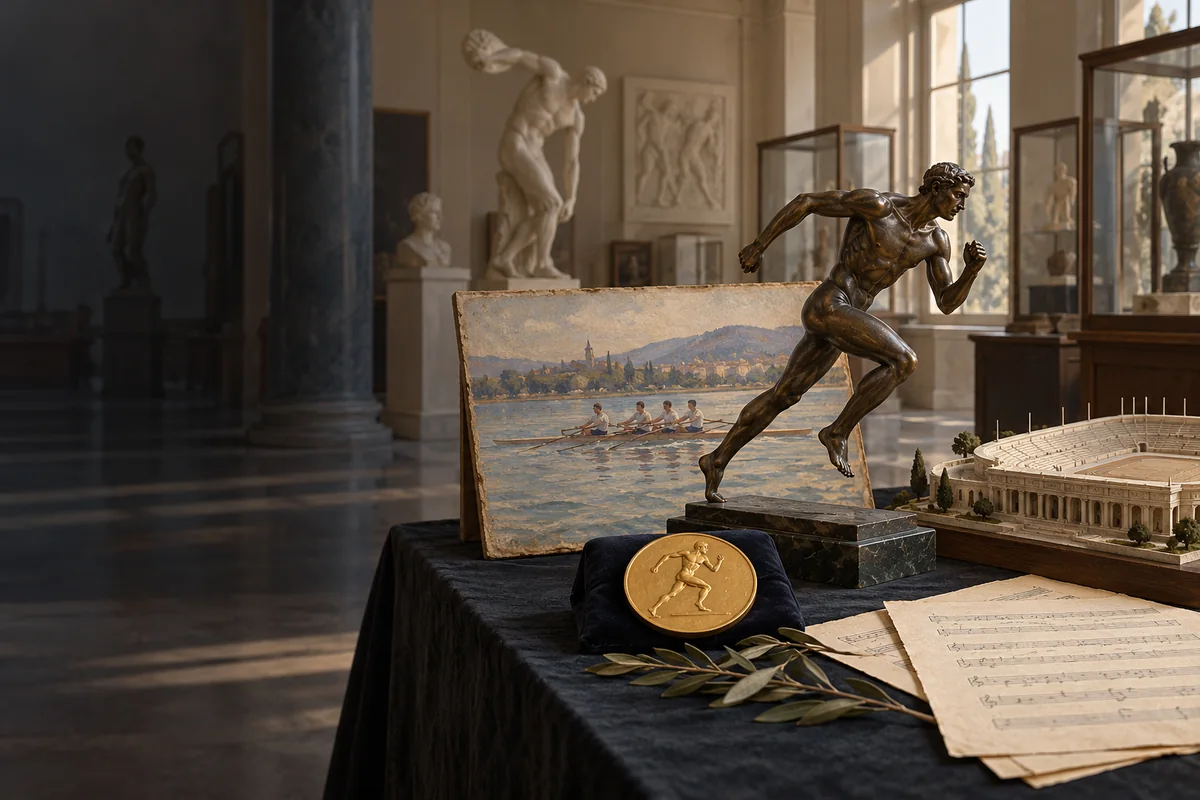
Full story & sourcesYou could win Olympic gold for an architectural design
A project called “Stadium for a Modern Olympia” won gold in 1912. Architecture was one of five arts categories alongside literature, music, painting and sculpture, with sport central to the entries. Competitive arts medals continued through 1948; an architectural medal did not itself mean the proposed building was constructed.
Full story & sourcesAustralia deployed soldiers against crop-damaging emus
The 1932 operation brought military equipment to a farming problem. Dispersing birds proved difficult to control, and damage to crops and fences continued. The “Emu War” nickname captures the embarrassment, but reported kill totals are disputed estimates, and there was no literal national surrender to the birds.
Full story & sourcesAn attempt to dispose of a whale crushed a parked car
Oregon officials used explosives on a stranded whale, intending to leave pieces small enough for scavengers. Instead, heavy debris scattered and one piece crushed a car; a cleanup job remained. A local television crew recorded the event, giving the remarkable story a contemporary film record.
Full story & sources
Stay curious
There’s more to every story.
These are short readings, not the whole account. Explore the 30-story collection for deeper explanations and sources, or find your next quiz in the Games library.